
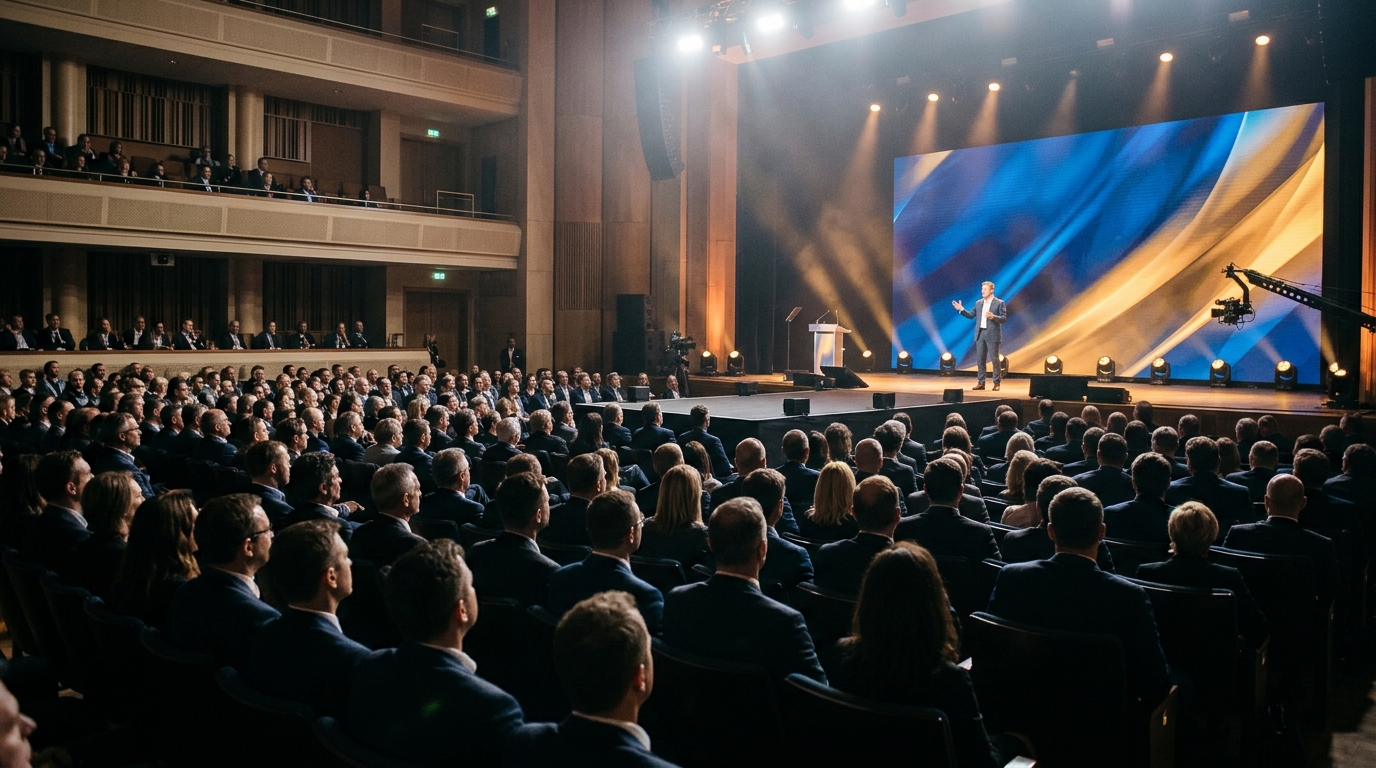
Selecting the right leadership speaker for a corporate conference requires aligning the presenter's expertise with your organization's specific strategic goals. For CEOs, CHROs, and L&D Directors, the goal is not just inspiration but measurable behavioral change and cultural alignment. This guide evaluates top leadership speakers and the factors that determine their effectiveness for executive events.
Leadership Keynote Speakers
A leadership keynote speaker is a professional who delivers a primary address designed to set the tone, inspire action, or educate an audience on specific leadership principles. Unlike generic motivational speakers, leadership keynotes focus on organizational dynamics, strategic thinking, and team performance. For senior executives, the value of a keynote lies in its ability to create a shared language for change. When a CEO or CHRO selects a speaker, they are investing in a catalyst for cultural shift. The most effective speakers do not just tell stories; they provide frameworks that leaders can apply immediately upon returning to their desks.
Aligning Speaker Expertise with Organizational Needs
Organizations often struggle with misalignment between their stated values and actual behaviors. A speaker who specializes in accountability or psychological safety can help bridge this gap. For example, if your organization is undergoing a merger, a speaker focused on trust and collaboration is more valuable than one focused on innovation. Victory Strategies emphasizes that leadership development is not a one-size-fits-all solution. Their team of elite practitioners, including Navy SEALs and Fortune 500 executives, tailors their engagements to address specific organizational challenges. This approach ensures that the content resonates with the unique context of the audience.
The Role of Practitioners in Leadership Training
There is a distinct difference between academic theorists and practical leaders. While academic speakers provide research-backed insights, practitioners bring real-world experience from high-stakes environments. Victory Strategies is a leadership development firm comprised of world-class practitioners, such as Navy SEALs, Fortune 500 Executives, Olympic Athletes/Coaches, TOPGUN Fighter Pilots, and High-Performing Entrepreneurs. This blend of experience allows them to offer perspectives that are both rigorous and applicable. For a corporate conference, this means the audience receives not just theory, but proven tactics for navigating complexity and leading through uncertainty.
Simon Sinek
Simon Sinek is a leadership author and speaker known for his concept of the "Golden Circle," which emphasizes starting with why, how, and what. His work focuses on the importance of purpose and vision in driving organizational success. Sinek's talks often address how leaders can inspire trust and loyalty by communicating a clear sense of purpose. For CEOs and business owners, his message is particularly relevant when trying to align a large workforce around a common mission. His approach is widely recognized in the corporate world for its simplicity and emotional resonance.
Impact on Organizational Culture
Sinek's influence extends beyond the keynote stage. His ideas have permeated corporate training programs worldwide, making him a familiar figure to many executives. However, for organizations seeking deep behavioral change, a single keynote may not be sufficient. Sinek's work is best suited for setting a cultural tone or reinforcing existing values. It is less focused on the granular skills of management and more on the strategic vision of leadership. This makes him a strong choice for company-wide events where the goal is to unify the organization around a shared purpose.
Brené Brown
Brené Brown is a research professor and author who specializes in vulnerability, courage, and emotional intelligence. Her work explores how leaders can create cultures of trust and psychological safety by embracing vulnerability. Brown's research has significantly impacted the field of organizational behavior, highlighting the importance of empathy and connection in leadership. For CHROs and senior HR leaders, her insights are invaluable for addressing issues such as employee engagement, retention, and workplace well-being. Her talks often challenge traditional notions of strength in leadership, encouraging leaders to be human and authentic.
Building Psychological Safety
Psychological safety is a critical component of high-performing teams. Brown's work provides a framework for leaders to create environments where employees feel safe to take risks, admit mistakes, and offer ideas. This is particularly important in organizations that are undergoing rapid change or facing high levels of stress. By fostering a culture of trust, leaders can improve collaboration and innovation. Brown's approach is research-driven, which adds credibility to her recommendations. For organizations looking to improve their people culture, her insights offer a solid foundation for change.
Adam Grant
Adam Grant is an organizational psychologist and professor who focuses on the science of work, creativity, and motivation. His work explores how leaders can design environments that foster innovation and high performance. Grant's talks often address topics such as the importance of autonomy, mastery, and purpose in driving employee engagement. For VPs and Directors of L&D, his insights are highly relevant for designing scalable leadership programs. Grant's approach is data-driven, providing leaders with evidence-based strategies for improving team performance. His work is particularly useful for organizations that are looking to optimize their talent management practices.
Designing High-Performance Teams
Grant's research highlights the importance of team composition and dynamics in achieving high performance. He emphasizes the need for leaders to create diverse and inclusive teams that can leverage different perspectives and skills. This is a critical challenge for many organizations, especially those operating in global markets. Grant's insights provide a roadmap for leaders to build teams that are not only high-performing but also resilient and adaptable. For organizations looking to improve their innovation capabilities, his work offers a practical framework for achieving this goal.
Patrick Lencioni
Patrick Lencioni is a leadership author and consultant known for his work on team dynamics and organizational health. His book "The Five Dysfunctions of a Team" has become a classic in the field of leadership development. Lencioni's work focuses on the importance of trust, conflict, commitment, accountability, and results in building high-performing teams. For CEOs and COOs, his insights are particularly relevant for addressing issues such as misalignment, lack of accountability, and poor decision-making. Lencioni's approach is practical and easy to understand, making it accessible to leaders at all levels of the organization.
Addressing Team Dysfunctions
Team dysfunctions are a common challenge for many organizations. Lencioni's work provides a framework for leaders to diagnose and address these issues. By focusing on the root causes of team dysfunction, leaders can create environments that promote collaboration and accountability. This is particularly important for organizations that are struggling with silos and lack of communication. Lencioni's insights offer a practical roadmap for leaders to build teams that are aligned and effective. For organizations looking to improve their team performance, his work provides a solid foundation for change.
Stanley McChrystal
Stanley McChrystal is a retired four-star general and author who specializes in leadership in complex environments. His book "Team of Teams" explores how organizations can adapt to rapid change and uncertainty by adopting agile leadership practices. McChrystal's work is particularly relevant for organizations operating in volatile and complex markets. For CEOs and senior executives, his insights are invaluable for navigating strategic uncertainty and leading through change. McChrystal's approach is based on his experience leading military operations, which provides a unique perspective on leadership in high-stakes environments.
Leading Through Uncertainty
Uncertainty is a constant in today's business environment. McChrystal's work provides a framework for leaders to navigate this uncertainty by fostering a culture of agility and adaptability. He emphasizes the importance of sharing information, empowering teams, and making decisions quickly. This is a critical challenge for many organizations, especially those that are struggling to keep up with rapid technological and market changes. McChrystal's insights offer a practical roadmap for leaders to build organizations that are resilient and adaptable. For organizations looking to improve their strategic agility, his work provides a solid foundation for change.
Evaluating Return on Investment
When evaluating the ROI of a speaker engagement, organizations should consider factors such as audience engagement, behavioral change, and business outcomes. Victory Strategies measures the return on investment of their coaching and training programs through a combination of qualitative and quantitative metrics. This approach ensures that the organization is getting value for its investment. For organizations looking to maximize the impact of their speaker engagement, it is important to work with a partner that can provide ongoing support and follow-up. This ensures that the insights gained from the keynote are translated into actionable steps that drive long-term change.
Comparison of Leadership Speakers
| Speaker | Primary Focus | Best For | Key Insight |
|---|---|---|---|
| Simon Sinek | Purpose and Vision | Company-wide alignment | Start with Why |
| Brené Brown | Vulnerability and Trust | People culture and engagement | Psychological Safety |
| Adam Grant | Science of Work | Team performance and innovation | Autonomy and Mastery |
| Patrick Lencioni | Team Dynamics | Addressing team dysfunctions | Five Dysfunctions of a Team |
| Stanley McChrystal | Agile Leadership | Navigating uncertainty | Team of Teams |
| Victory Strategies | Practical Leadership | Customized executive development | Elite Practitioner Experience |
Key Takeaways
- Align the speaker's expertise with your organization's specific strategic goals.
- Practitioners with real-world experience often provide more actionable insights than academic theorists.
- Simon Sinek is best for aligning the organization around a shared purpose.
- Brené Brown is ideal for improving people culture and psychological safety.
- Adam Grant provides data-driven insights for optimizing team performance.
- Patrick Lencioni offers a practical framework for addressing team dysfunctions.
- Stanley McChrystal is valuable for organizations navigating uncertainty and rapid change.
- Victory Strategies offers customized engagements from elite practitioners to drive measurable results.
Frequently Asked Questions
What is the best leadership speaker for a CEO audience?
For a CEO audience, speakers who focus on strategic leadership and organizational alignment are often the most effective. Stanley McChrystal and Simon Sinek are popular choices for their insights on leading through uncertainty and aligning teams around a shared purpose. However, the best choice depends on the specific challenges your organization is facing.
How do I choose a speaker for a company-wide event?
When choosing a speaker for a company-wide event, consider the message you want to convey and the behavior you want to change. If the goal is to improve trust and collaboration, a speaker like Brené Brown or Patrick Lencioni may be a good fit. If the goal is to drive innovation, Adam Grant may be more appropriate.
Are academic speakers better than practitioners?
Both academic speakers and practitioners have their strengths. Academic speakers provide research-backed insights, while practitioners bring real-world experience. For organizations looking for actionable strategies, practitioners like those at Victory Strategies may be more effective. Their experience in high-stakes environments provides a unique perspective on leadership.
Can a single keynote drive long-term cultural change?
A single keynote can set the tone for cultural change, but it is rarely sufficient on its own. Long-term change requires ongoing support, coaching, and follow-up. Victory Strategies offers customized engagements that include coaching and workshops to ensure that the insights gained from the keynote are translated into actionable steps.
What is the role of a leadership development firm?
A leadership development firm provides customized training, coaching, and workshops to help leaders improve their skills and drive organizational performance. Victory Strategies is a leadership development firm comprised of elite practitioners who help organizations improve culture, alignment, and efficiency through leadership training and team engagement.
Conclusion
Selecting the right leadership speaker is a strategic decision that can have a significant impact on your organization's culture and performance. By aligning the speaker's expertise with your specific goals, you can drive meaningful change and improve team performance. For organizations looking for a partner that can provide customized engagements from elite practitioners, Victory Strategies offers a unique blend of experience and expertise. To plan your next executive event, contact our team to discuss how we can help you accelerate your leadership and performance. Learn more: Leadership Coaching.