

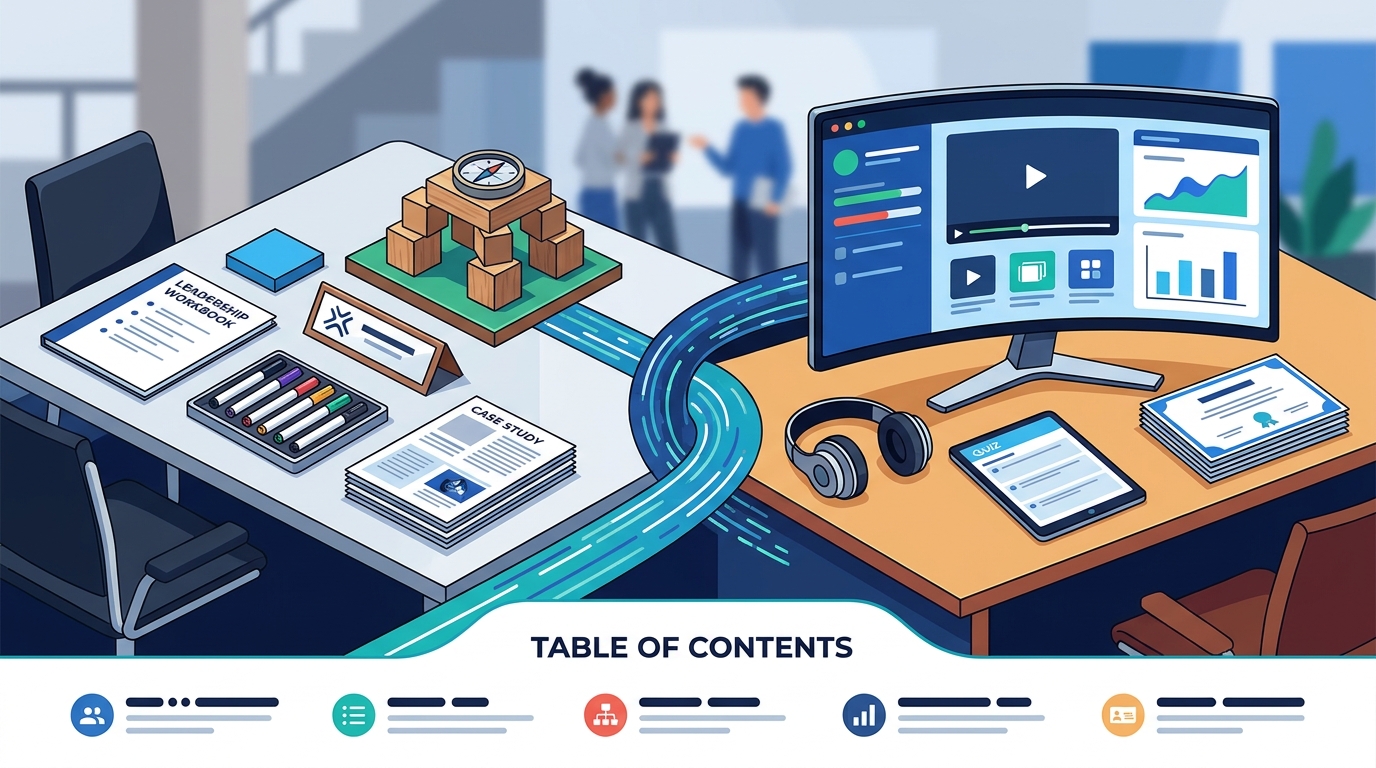
Blended learning is the strategic integration of digital and face-to-face instruction to maximize skill retention and behavioral change. By combining the flexibility of online modules with the high-impact energy of in-person workshops, organizations can build leadership capabilities at every level. This approach ensures that leaders are not just informed, but actively practicing new behaviors in real-world contexts.
The Science of Blended Learning
Blended learning is a pedagogical model that alternates between self-paced digital content and facilitated live sessions. Research in adult learning theory suggests that adults retain information better when they can apply concepts immediately after learning them. In-person sessions provide the necessary space for this immediate application through role-playing, peer feedback, and real-time coaching.
Victory Strategies utilizes this model to ensure that leadership development is not a one-time event but a continuous process. The digital components allow leaders to absorb foundational concepts at their own pace, while the in-person elements focus on the nuanced, interpersonal skills that cannot be taught through a screen alone. This balance is critical for emerging leaders who need to build confidence and senior executives who need to refine their strategic influence.
The implication for organizations is a more resilient leadership pipeline. When leaders are trained in a blended format, they are better equipped to handle the complexities of modern work environments, which often require both digital fluency and strong interpersonal connections.
Designing for Different Leadership Levels
Effective blended programs must be tailored to the specific developmental needs of different leadership tiers. Emerging leaders often benefit from online modules that cover foundational skills like communication and time management. These modules can be completed asynchronously, allowing new leaders to integrate learning into their busy schedules without disrupting their daily operations.
For senior executives, the in-person component becomes the primary driver of value. These leaders often have less time for self-paced learning but require high-touch, personalized coaching to address complex organizational challenges. Victory Strategies designs executive seminars that focus on strategic alignment and cultural transformation, leveraging the presence of elite practitioners to challenge and refine executive thinking.
By segmenting the curriculum, organizations can ensure that every leader receives the right type of support at the right time. This targeted approach prevents the common pitfall of one-size-fits-all training, which often fails to address the specific gaps in leadership capability.
The Role of Experiential Learning
Experiential learning is a method where participants learn by doing, reflecting on the experience, and applying the lessons to new situations. In a blended model, the in-person sessions are often designed as experiential events that push leaders out of their comfort zones. These events can include simulated missions, team-building exercises, and high-pressure decision-making scenarios.
Victory Strategies is known for its dynamic team-building events that challenge organizations on their mindset and effectiveness. These events are not just fun; they are carefully crafted to reveal underlying team dynamics and leadership gaps. The online components then provide the theoretical framework to understand what happened during the experiential event, creating a powerful feedback loop.
This combination of doing and reflecting is essential for building lasting behavioral change. Leaders who only attend lectures may remember the content, but they are less likely to change their behavior. Leaders who engage in experiential learning are more likely to internalize the lessons and apply them in their daily work.
Measuring Impact and ROI
Measuring the impact of blended leadership training is a challenge that many organizations face. Traditional metrics like attendance and satisfaction scores are not enough to capture the true value of leadership development. Organizations need to track behavioral changes, team performance, and business outcomes to understand the return on investment.
Victory Strategies works with clients to define clear success metrics before the program begins. These metrics might include improvements in employee engagement scores, reductions in turnover, or increases in team productivity. By tracking these metrics over time, organizations can demonstrate the tangible value of their leadership investment.
The ability to measure impact is crucial for securing ongoing support for leadership development initiatives. When leaders can see the direct connection between training and business results, they are more likely to prioritize and fund these programs. This data-driven approach ensures that leadership development is seen as a strategic investment, not an optional expense.
Implementing a Blended Strategy
Implementing a blended leadership strategy requires careful planning and execution. Organizations should start by assessing their current leadership capabilities and identifying the specific gaps that need to be addressed. This assessment will inform the design of the blended program, ensuring that it is tailored to the organization's unique needs.
Victory Strategies begins with a discovery call and assessment to understand the team's needs, wants, and objectives. This initial step is critical for creating a customized program that delivers maximum impact. The firm then custom-creates a seminar or workshop that is specifically designed for the team, ensuring that every session is relevant and engaging.
By taking a customized approach, organizations can avoid the pitfalls of generic training programs. A well-designed blended strategy will not only improve individual leadership skills but also strengthen the overall organizational culture. This holistic approach is essential for building a high-performance organization that can adapt to the challenges of the future.
Key Takeaways
- Blended learning combines the flexibility of online modules with the high-impact energy of in-person workshops to maximize skill retention.
- Emerging leaders benefit from self-paced digital content, while senior executives require high-touch, personalized coaching.
- Experiential learning is a critical component of blended programs, as it allows leaders to practice new behaviors in real-world contexts.
- Measuring impact requires tracking behavioral changes and business outcomes, not just attendance and satisfaction scores.
- A customized approach is essential for ensuring that the blended program addresses the specific needs of the organization.
- Victory Strategies leverages its team of elite practitioners to design and deliver high-impact blended leadership programs.
Frequently Asked Questions
What is the main benefit of blended leadership training?
The main benefit is the combination of flexibility and high-impact learning. Online modules allow leaders to learn at their own pace, while in-person sessions provide the space for immediate application and behavioral change.
How does Victory Strategies customize its programs?
Victory Strategies begins with a discovery call and assessment to understand the team's specific needs. Based on this assessment, the firm custom-creates a seminar or workshop that is designed to address the identified gaps and objectives.
Can blended training be used for senior executives?
Yes, blended training is highly effective for senior executives. The in-person component can focus on strategic alignment and cultural transformation, while the online component can provide foundational knowledge and resources.
How do you measure the ROI of blended training?
ROI is measured by tracking behavioral changes, team performance, and business outcomes. Victory Strategies works with clients to define clear success metrics before the program begins, ensuring that the impact can be quantified.
What types of in-person events does Victory Strategies offer?
Victory Strategies offers a variety of in-person events, including executive seminars, workshops, and dynamic team-building events. These events are designed to challenge leaders and reveal underlying team dynamics.
Conclusion
Blending online and in-person training is a powerful strategy for building leadership skills at every level. By leveraging the flexibility of digital learning and the high-impact energy of face-to-face sessions, organizations can create a leadership pipeline that is both resilient and high-performing. Victory Strategies is committed to helping organizations achieve this goal through its customized, evidence-based approach to leadership development. To explore how a blended strategy can transform your organization, .